

Introduction
Definition and origin of Plinko gambling
Plinko gambling Australia is a captivating casino game that combines elements of chance and entertainment. The game’s name “Plinko” is derived from the distinctive sound made by the chips as they bounce down the pegs on the board. Originating in the United States, Plinko gained widespread fame through its feature on the popular game show “The Price Is Right.” The game involves a vertical board with a series of pegs, through which players drop a small puck or chip. As the chip makes its descent, it randomly lands in various prize slots at the bottom of the board, each associated with a different cash value. The excitement of Plinko lies in the unpredictability of where the chip will land, making it a thrilling gambling experience for players seeking both entertainment and the possibility of winning lucrative prizes. As its popularity has grown, Plinko has found its way into casinos and gaming establishments worldwide, including Australia, where its unique gameplay and engaging nature have captured the attention of gamblers across the country.

Overview of Plinko’s popularity in Australia
Plinko has rapidly emerged as a beloved gambling attraction in Australia, captivating both seasoned gamblers and casual players alike. The game’s popularity can be attributed to its engaging and simple gameplay, making it accessible to a wide audience. Whether in land-based casinos, gaming lounges, or online gambling platforms, Plinko has found its place among the diverse range of betting options available to Australian players. Its association with the famous television game show “The Price Is Right” has undoubtedly contributed to its recognition and appeal in the country. Beyond its entertainment value, Plinko’s potential for substantial winnings has attracted many players, seeking the thrill of watching their chips navigate through the pegs to reveal exciting prizes. As a result, Plinko has become a social and interactive gambling experience, fostering a sense of community among players as they share the anticipation and excitement of each drop. This article aims to delve into the reasons behind Plinko’s popularity in Australia, exploring its impact on the gambling landscape and examining the regulations and implications surrounding its widespread presence.
Plinko Gambling Australia – Purpose and scope of the article
The purpose of this article is to provide an in-depth exploration of Plinko gambling in the context of Australia. It seeks to shed light on the game’s rising popularity, the factors contributing to its success, and its implications for both the industry and society at large. The article will delve into the mechanics of Plinko, explaining how the game works and analyzing the odds and probabilities involved. Additionally, it will examine the regulatory framework governing Plinko gambling in Australia, exploring the legal status of the game and the measures in place to ensure responsible gambling practices. The article will also address the impact of Plinko on individuals and communities, discussing both the positive aspects, such as economic contributions and entertainment value, and the potential negative implications, including concerns related to problem gambling. Furthermore, the article will touch upon the responsible gambling initiatives in place and the efforts taken by the industry to promote safe gameplay. Finally, the article will offer insights into the future trends and outlook for Plinko gambling Australia, considering technological advancements, potential regulatory changes, and its position within the broader gambling landscape. By presenting a comprehensive and balanced examination, this article aims to foster a deeper understanding of Plinko gambling and its significance in the Australian gambling scene.
Table of Contents
The Rise of Plinko Gambling in Australia
Plinko Gambling Australia – Historical background
The historical background of Plinko gambling can be traced back to the United States in the late 1970s. The game’s origins are linked to its iconic appearance on the long-running and immensely popular television game show, “The Price Is Right.” Plinko made its debut on the show in 1983, and quickly captured the imagination of audiences with its unique and entertaining gameplay. The concept of Plinko was inspired by the classic “pachinko” machines from Japan, which also involved dropping balls down a series of pegs to determine the outcome. The game’s name “Plinko” was derived from the distinct sound the chips make as they bounce between the pegs on the vertical board. As it gained immense fame on television, Plinko became a cultural phenomenon, and its popularity spread beyond the show’s boundaries. Recognizing its allure as a casino-style game, casinos and gaming establishments in the US and other parts of the world began incorporating Plinko into their offerings. Its appeal lies in the combination of chance and entertainment, making it a favorite among gamblers seeking a thrilling and unpredictable gaming experience. Over the years, Plinko has become an enduring symbol of casino entertainment, and its popularity continues to grow in various countries, including Australia, where it has found a place among the diverse array of gambling options available to players.
Factors contributing to its popularity in Australia
Several factors have contributed to the rising popularity of Plinko gambling Australia. Firstly, the game’s unique gameplay and engaging nature have captured the attention of players across the country. The simple yet exciting concept of dropping a chip down a vertical board, with the anticipation of where it will land, creates a sense of thrill and suspense for participants. This interactive and social aspect of Plinko appeals to a wide range of players, from casual gamblers seeking fun to seasoned bettors looking for a break from traditional casino games.
Secondly, the availability of Plinko in both land-based casinos and online gambling platforms has further bolstered its popularity. Players can enjoy the game in brick-and-mortar casinos, where the physical presence of the Plinko board adds to the overall experience. Simultaneously, online casinos offer the convenience of playing Plinko from the comfort of one’s home or on the go, attracting a diverse audience of players.
Thirdly, media exposure and marketing strategies have played a significant role in popularizing Plinko Gambling Australia. Television shows, such as “The Price Is Right” and other game-related content, have showcased the excitement and potential winnings associated with the game. Additionally, targeted advertising and promotions by casinos and gaming platforms have heightened awareness and encouraged players to try their luck at Plinko.
Overall, the combination of its captivating gameplay, accessibility through various gambling venues, and effective marketing efforts has contributed to Plinko’s increasing popularity in Australia, solidifying its position as a beloved and sought-after gambling attraction in the country.
Plinko Gambling Australia – Unique gameplay and entertainment value
Plinko gambling offers a truly unique gameplay experience that sets it apart from traditional casino games. The game’s concept of dropping a chip down a vertical board with a series of pegs creates an element of unpredictability and excitement that keeps players on the edge of their seats. As the chip bounces and zigzags through the maze of pegs, the outcome becomes entirely uncertain, adding an element of chance and suspense to each round. This interactive and dynamic nature of Plinko Gambling Australia engages players on a different level, making it an enjoyable and entertaining gambling option.
Moreover, Plinko’s simplicity and accessibility add to its entertainment value. Unlike many complex casino games that may require learning intricate rules or strategies, Plinko’s rules are straightforward, making it easy for both novice and experienced gamblers to participate. The game’s appeal lies not only in the potential for monetary winnings but also in the sheer joy of watching the chip’s journey and the anticipation of where it will land. This engaging and visually appealing spectacle creates a sense of camaraderie among players as they cheer and celebrate each chip’s outcome together.
Additionally, the social aspect of Plinko further enhances its entertainment value. Whether played in a land-based casino setting or through online platforms, the shared excitement and anticipation create a sense of community among players. Friends, family, or strangers can gather around the Plinko board, exchanging cheers and laughter as they take turns dropping chips and celebrating wins.
In conclusion, the unique gameplay and entertainment value of Plinko Gambling Australia have undoubtedly contributed to its growing popularity in Australia and beyond. The combination of chance, simplicity, and the thrill of the game’s outcome make Plinko a standout attraction in the world of gambling, offering an enjoyable and memorable experience for all who take part.
Availability in land-based casinos and online platforms
The widespread availability of Plinko gambling in both land-based casinos and online platforms has significantly contributed to its popularity and accessibility in Australia. In brick-and-mortar casinos, players can experience the excitement of Plinko in a tangible and immersive setting. The physical presence of the Plinko board, along with the sounds of the chips bouncing down the pegs, adds to the overall experience, creating a thrilling atmosphere for players. This setup allows individuals to engage socially, sharing the anticipation and joy with fellow players, enhancing the communal aspect of the game.
On the other hand, the digital era has brought Plinko to the virtual realm, with numerous online gambling platforms offering the game to players at their convenience. Online Plinko offers the advantage of anytime, anywhere access, enabling players to enjoy the game from the comfort of their homes or on the go via mobile devices. The user-friendly interfaces and advanced graphics in virtual Plinko simulations replicate the excitement of the physical game, ensuring an immersive experience for online players.

The combination of availability in land-based casinos and the convenience of online platforms caters to a diverse audience, appealing to those who prefer the traditional casino ambiance as well as individuals seeking the flexibility and ease of virtual gaming. As a result, Plinko’s presence across various gambling avenues in Australia has made it a popular choice for entertainment and betting, contributing to its growing popularity and lasting appeal in the country’s gambling landscape.
Media exposure and marketing strategies
Media exposure and strategic marketing efforts have played a significant role in elevating the popularity of Plinko gambling in Australia. One of the primary drivers of Plinko’s recognition is its frequent appearances on television game shows, most notably on “The Price Is Right.” The exposure on such widely watched programs has introduced the game to a vast audience, sparking interest and curiosity among viewers. The captivating and thrilling gameplay of Plinko showcased on television has left a lasting impression, prompting many viewers to seek out the game at casinos and online platforms.
In addition to television exposure, targeted marketing strategies by casinos and gaming operators have further amplified Plinko’s appeal. Casinos often promote the game through advertisements, enticing offers, and special events to attract players. Online gambling platforms leverage digital marketing techniques, including social media campaigns and influencer partnerships, to reach a broader audience and generate excitement around Plinko gambling.
Moreover, the use of gamification and loyalty programs has incentivized players to try Plinko, offering rewards, bonuses, or exclusive promotions linked to the game. This approach not only encourages players to engage with Plinko but also fosters a sense of loyalty and repeat play.
By leveraging media exposure and employing strategic marketing initiatives, Plinko has successfully captured the attention of Australian gamblers, establishing itself as a beloved and sought-after casino game. The combination of captivating gameplay showcased in the media and effective promotional efforts has undoubtedly contributed to Plinko’s rising popularity and enduring allure in the Australian gambling landscape.
Understanding the Mechanics of Plinko
How Plinko works as a casino game
Plinko functions as a thrilling casino game by blending elements of chance and anticipation to create an entertaining and interactive gambling experience. The game typically consists of a vertical board with a series of pegs and multiple slots at the bottom, each associated with a specific cash value or prize. Players start by placing their bets on where they think the chip will land when dropped from the top of the board. Once the chip is released, it cascades through the maze of pegs, bouncing off them at random angles before finally landing in one of the prize slots at the bottom.
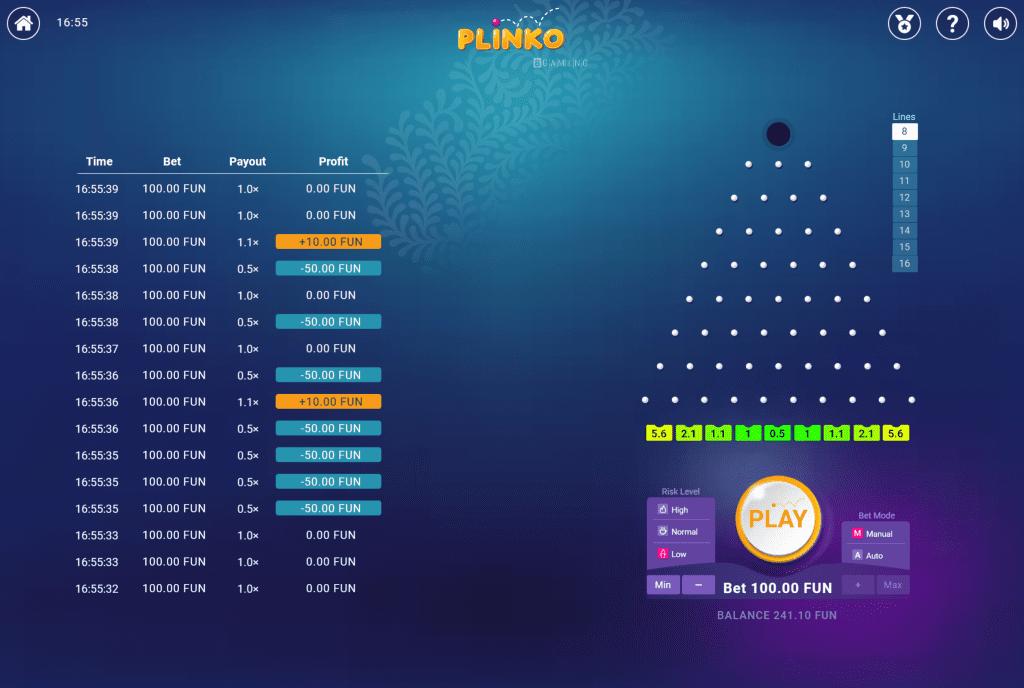
The outcome of Plinko is entirely determined by the laws of physics, making it a game of pure luck. Players eagerly watch the chip’s descent, cheering as it navigates its way down the board, creating an element of excitement and unpredictability. The cash value or prize associated with the slot in which the chip ultimately lands determines the player’s payout, and they can receive their winnings immediately.
Plinko’s simplicity, combined with the visual spectacle and the sense of shared anticipation among players, adds to its appeal. Whether played in a land-based casino with a physical Plinko board or through a virtual simulation on online platforms, the game’s mechanics remain the same, offering an exhilarating gambling experience for players seeking instant gratification and a touch of randomness in their bets.
Game setup and equipment
The setup and equipment for Plinko gambling are essential elements that contribute to the game’s immersive and entertaining experience. In a land-based casino, the game typically features a large, vertical Plinko board prominently displayed on the casino floor. The board consists of a series of evenly spaced pegs, forming a maze-like path down the surface. At the bottom of the board, there are multiple slots, each marked with a cash value or prize, where the chips will ultimately land.
The chips used in Plinko are usually small, round discs made from durable materials like plastic or metal. These chips are released from the top of the board, allowing gravity to guide them through the pegs as they zigzag their way down.
To begin the game, players place their bets on the different slots or outcomes they believe the chip will land in. Once the bets are placed, the chip is dropped from the top of the board, setting off a thrilling chain of events as it navigates through the pegs, creating a mesmerizing visual display of its path.
In the online gambling world, virtual Plinko simulations replicate the physical setup using advanced graphics and animation. Players can interact with the digital Plinko board through their computers or mobile devices, enjoying the same excitement and anticipation as they would in a land-based casino.
The game setup and equipment in Plinko ensure a seamless and engaging gaming experience, captivating players with its unique gameplay and offering the opportunity for instant winnings based purely on chance.
Betting options and payout structures
Plinko gambling offers players a variety of betting options and payout structures, adding to the game’s appeal and versatility. When participating in Plinko, players have the flexibility to place their bets on different slots or outcomes at the bottom of the board. These slots are marked with various cash values or prizes, and the corresponding payout for each slot depends on the level of risk associated with it.
Typically, Plinko boards feature a range of slots with different cash values, ranging from lower amounts to more significant rewards. The slots with higher payouts are generally positioned in areas of the board that are more challenging to reach, while slots with lower payouts may be more accessible.
Players can tailor their betting strategy according to their risk tolerance and desired potential winnings. They may choose to place multiple bets on different slots, spreading their risk for the chance of more frequent but smaller wins. Alternatively, players might opt for riskier bets on the higher-paying slots, aiming for the excitement of a potentially substantial reward.
In both land-based casinos and online platforms, the payout structure in Plinko is transparent and predetermined. Once the chip comes to rest in a particular slot, the corresponding cash value or prize is immediately awarded to the player.
The diverse betting options and payout structures in Plinko make it an engaging and dynamic casino game, appealing to players with varying preferences and betting strategies. The element of choice and the potential for sizable winnings based on luck and strategy add depth to the game, making Plinko a popular choice among gamblers seeking an exhilarating and rewarding gaming experience.
Analyzing the odds and probabilities in Plinko
Analyzing the odds and probabilities in Plinko is crucial for players looking to make informed betting decisions and understand the potential outcomes of the game. Since Plinko is a game of chance, the odds of the chip landing in any specific slot are determined by the number of pegs the chip encounters on its way down the board. As the chip can move left or right at each peg, the paths it may take become increasingly diverse as it descends, making it difficult to predict its final destination.
Calculating the precise probabilities in Plinko can be challenging due to the complexity of the chip’s trajectory, but some general trends can be observed. Typically, slots located near the center of the board have higher probabilities of being reached by the chip, resulting in a greater chance of winning smaller payouts. On the other hand, slots positioned on the edges or corners of the board have lower probabilities of being reached, but they offer the potential for more significant winnings.
Understanding the probabilities can help players devise betting strategies that align with their risk tolerance and desired rewards. While there is an element of luck involved in Plinko, some players may choose to focus on the slots with higher odds, aiming for more consistent, albeit smaller, wins. Others might prefer to take a riskier approach, targeting the slots with lower probabilities but the possibility of substantial payouts.
In conclusion, while the precise odds in Plinko may be challenging to calculate, players can gain insights into the game’s mechanics and probabilities by observing the distribution of the pegs and the positioning of the slots. By analyzing the odds, players can make informed decisions when placing their bets, enhancing their overall gaming experience and potentially increasing their chances of walking away with rewarding prizes.
House edge and RTP (Return-to-Player) percentages
The house edge and RTP (Return-to-Player) percentages are important metrics that provide valuable insights into the fairness and profitability of Plinko gambling. The house edge refers to the mathematical advantage that the casino holds over players in a particular game. In Plinko, the house edge is influenced by the design of the board, including the placement of the pegs and the distribution of the slots with different cash values. Since Plinko involves chance and the chip’s trajectory is unpredictable, calculating the exact house edge can be complex, but it generally falls within a specific range.
Conversely, the RTP percentage represents the portion of the total bets made by players that is expected to be returned to them over time. For example, if a Plinko game has an RTP of 95%, it means that, on average, players can expect to receive back $95 for every $100 wagered. The RTP percentage is inversely related to the house edge; the lower the house edge, the higher the RTP, and vice versa.
In Plinko, the RTP percentage is typically lower than some other casino games, as the game’s unpredictability and the casino’s advantage affect the overall return to players. However, it’s essential to remember that the RTP is an average value calculated over a long period and doesn’t guarantee specific outcomes for individual players in a single session.
Understanding the house edge and RTP percentages in Plinko allows players to make informed decisions about their betting strategy and manage their expectations regarding potential winnings. While luck plays a significant role in Plinko, being aware of these metrics empowers players to enjoy the game responsibly and maximize their entertainment while engaging in this thrilling casino experience.
Strategies and tips for players
While Plinko is a game of chance, there are some strategies and tips that players can consider to enhance their gaming experience and potentially improve their odds of winning. Firstly, players should familiarize themselves with the Plinko board’s layout, paying attention to the distribution of pegs and the placement of higher and lower-paying slots. Understanding the board’s design can help players make more informed betting decisions based on the chip’s likely trajectory.
Secondly, managing bankroll effectively is crucial in any gambling endeavor. Setting a budget and sticking to it can prevent players from overspending and enable them to enjoy Plinko responsibly. It’s advisable to avoid chasing losses and never bet more than one can afford to lose.
Another strategy is to diversify betting options. Placing bets on a mix of high and low-paying slots can strike a balance between the potential for substantial wins and the likelihood of more frequent, smaller payouts. This approach can add variety to the gameplay and reduce the risk of depleting one’s bankroll too quickly.
Additionally, while it’s natural to get caught up in the excitement of the game, it’s essential to remain patient and composed. Plinko can be unpredictable, and winning outcomes may not occur immediately. Staying calm and sticking to the betting strategy can contribute to a more enjoyable and controlled gaming experience.
Lastly, players may consider taking advantage of any bonuses or promotions offered by casinos or online platforms. Bonuses can provide additional chips or benefits that extend gameplay and increase the potential for winnings.
In summary, while no foolproof strategy guarantees success in Plinko, these tips can help players make informed decisions and manage their gaming effectively. Keeping a balanced approach and remembering that Plinko is primarily a game of chance can contribute to a rewarding and enjoyable gambling experience.
Plinko Gambling Regulations in Australia
Overview of gambling laws in Australia
Australia has a well-established and comprehensive legal framework governing gambling activities within the country. Gambling laws in Australia are primarily regulated at the state and territory levels, resulting in slight variations in regulations across different regions. The main piece of federal legislation related to gambling is the Interactive Gambling Act 2001 (IGA), which targets online gambling operators and prohibits the provision of certain interactive gambling services to Australian residents.
At the state and territory level, each jurisdiction has its own set of laws and regulatory bodies responsible for overseeing gambling activities within their borders. These laws cover various forms of gambling, including casino gaming, sports betting, lotteries, and electronic gaming machines (commonly known as pokies).
Licensing requirements for gambling operators are strict and aim to ensure the integrity and fairness of the industry. Regulatory bodies, such as the Australian Communications and Media Authority (ACMA) and various state gambling commissions, enforce compliance with these licensing requirements and investigate any breaches or misconduct.
Furthermore, responsible gambling measures are a significant aspect of Australia’s gambling laws. These measures aim to promote player protection, prevent problem gambling, and encourage responsible behavior among both operators and players. Gambling operators are required to implement self-exclusion programs, provide access to support services for problem gamblers, and display responsible gambling information on their websites and premises.
In conclusion, Australia’s gambling laws reflect the government’s commitment to balance the economic benefits of the gambling industry with the need to protect the well-being of its citizens. The legal framework ensures that gambling activities are conducted in a fair, transparent, and responsible manner, with strict regulations and oversight in place to maintain the integrity of the industry and safeguard the interests of both players and the community.
Legal status of Plinko and similar games
The legal status of Plinko and similar games in Australia is subject to the broader gambling laws and regulations governing the country. As a game of chance, Plinko is typically considered a form of casino-style gambling, and its legality falls under the purview of state and territory regulations. Most Australian states permit casinos and gaming establishments to offer a range of gambling activities, including games like Plinko.
However, it’s important to note that the legal status of Plinko may vary depending on the specific jurisdiction. Some states may have more restrictive gambling laws, while others may have more permissive regulations. Additionally, the online offering of Plinko and similar games is subject to the Interactive Gambling Act 2001 (IGA), which prohibits the provision of certain interactive gambling services to Australian residents by offshore operators.
The legal status of Plinko and similar games is also influenced by whether they are offered in licensed and regulated gambling venues or through unlicensed operators. Licensed casinos and gaming establishments must adhere to strict regulatory requirements, ensuring fair play, responsible gambling measures, and player protection.
In summary, the legal status of Plinko and similar games in Australia is determined by a combination of state and territory laws, federal regulations, and whether they are offered by licensed or unlicensed operators. Players should ensure they are participating in Plinko within the bounds of the law and at reputable and licensed gambling establishments to ensure a safe and legitimate gaming experience.
Licensing and regulatory bodies overseeing Plinko gambling
In Australia, licensing and regulation of Plinko gambling are carried out by various governmental bodies at the state and territory levels. Each jurisdiction has its own regulatory authority responsible for overseeing gambling activities within its borders. These regulatory bodies are tasked with ensuring that gambling operators comply with the relevant laws and regulations and maintain the integrity of the industry.
For example, in New South Wales, the Independent Liquor & Gaming Authority (ILGA) is responsible for licensing and regulating casinos and other gambling establishments, including those offering Plinko games. In Victoria, the Victorian Commission for Gambling and Liquor Regulation (VCGLR) fulfills a similar role in regulating the gambling industry and ensuring that operators meet their legal obligations.
In addition to state and territory regulatory bodies, there are federal agencies involved in overseeing certain aspects of Plinko gambling, particularly concerning online gambling. The Australian Communications and Media Authority (ACMA) is responsible for enforcing the Interactive Gambling Act 2001 (IGA), which targets online gambling operators providing services to Australian residents.
These licensing and regulatory bodies play a vital role in maintaining the integrity of Plinko gambling and other gambling activities in Australia. They conduct thorough vetting of operators, enforce compliance with responsible gambling measures, and investigate any potential breaches or misconduct. By upholding rigorous standards, these authorities aim to protect the interests of both players and the community, ensuring a safe and transparent gambling environment in Australia.
Responsible gambling measures and player protections
Responsible gambling measures and player protections are paramount in Australia’s gambling industry, including Plinko gambling. To promote responsible gambling practices, operators are required to implement a range of measures designed to protect players and mitigate the risks of problem gambling. Firstly, responsible gambling information is prominently displayed in casinos and on online platforms, providing players with resources on how to gamble responsibly and seek help if needed.
Self-exclusion programs are an essential feature that allows players to voluntarily exclude themselves from participating in Plinko and other gambling activities for a specific period or indefinitely. This empowers players to take control of their gambling habits and avoid potential harm.
Furthermore, strict age verification processes are enforced to ensure that only individuals of legal gambling age can participate in Plinko and other casino games. This prevents underage gambling and helps safeguard vulnerable individuals.
In addition to these measures, casinos and gaming operators are required to provide access to support services for problem gamblers, such as helplines and counseling resources. These services offer assistance to individuals who may be experiencing difficulties with their gambling behavior and help them seek appropriate support.
Moreover, responsible gambling advertising practices are enforced to prevent the promotion of gambling as a guaranteed way to financial success or a solution to personal problems.
By implementing these responsible gambling measures and player protections, Australia’s gambling industry aims to foster a safe and enjoyable environment for players while ensuring that the potential risks associated with gambling are minimized. These efforts underscore the commitment of regulatory authorities and operators to prioritize player well-being and responsible gambling practices throughout the country.
Impact on Society and Individuals
Positive aspects of Plinko gambling
Plinko gambling offers several positive aspects that contribute to its popularity and appeal among players. Firstly, the game provides a unique and entertaining experience, combining elements of chance and excitement that captivate both seasoned gamblers and casual players. Plinko’s simple gameplay and the visual spectacle of the chip bouncing through the pegs create an engaging and interactive atmosphere that keeps participants enthralled throughout each round.

Another positive aspect of Plinko gambling is its potential economic contributions. Plinko, like other casino games, generates revenue for casinos and gaming establishments, contributing to the local economy and supporting jobs in the gambling and hospitality sectors. Additionally, Plinko’s popularity can attract more patrons to casinos, enhancing tourism and boosting local businesses.
Moreover, Plinko serves as a social and community-building activity. Whether played in land-based casinos or on online platforms, the game brings people together, fostering camaraderie and shared excitement as players cheer on each other’s outcomes. This sense of community creates a positive and inclusive gambling experience, promoting social interactions and connections among players.
Overall, the positive aspects of Plinko gambling, such as its entertainment value, economic contributions, and social appeal, underscore why it remains a beloved casino game in Australia and other parts of the world. When enjoyed responsibly, Plinko provides a thrilling and rewarding gaming experience for individuals seeking both entertainment and the possibility of winning exciting prizes.
Economic contributions and job creation
Plinko gambling, like other forms of casino gaming, makes significant economic contributions and plays a role in job creation. Casinos and gaming establishments that offer Plinko provide a substantial source of revenue for the local economy. The revenue generated through Plinko gambling includes not only the bets placed by players but also spending on food, beverages, accommodations, and other amenities, enhancing the overall economic activity in the region.
The economic impact of Plinko extends beyond the casinos themselves, as the increased tourism and foot traffic generated by the game can benefit local businesses, such as restaurants, hotels, and entertainment venues. Moreover, the additional tax revenues generated from Plinko gambling contribute to funding essential public services and infrastructure projects.
Job creation is a significant outcome of Plinko gambling as well. Casinos and gaming establishments require a diverse workforce to operate efficiently, employing individuals in various roles such as dealers, customer service representatives, security personnel, and managerial positions. Moreover, the supply chain that supports the gambling industry, including suppliers of gaming equipment, hospitality services, and marketing agencies, also contributes to job opportunities.
Overall, Plinko gambling’s economic contributions and job creation are essential factors in supporting the growth of the gambling and entertainment industry, benefiting both the local community and the broader economy. As a result, Plinko plays a significant role in providing economic opportunities and enriching the livelihoods of individuals involved in the sector.
Entertainment value and social interaction
The entertainment value and social interaction offered by Plinko gambling are key elements that make the game a popular and enjoyable experience for players. Plinko’s unique gameplay, with its suspenseful and unpredictable nature, creates a captivating form of entertainment that keeps players engaged and excited throughout the game. The visual spectacle of the chip bouncing through the pegs and the anticipation of where it will land add an element of thrill and fun to each round, making Plinko a source of entertainment for individuals of all ages and gambling preferences.
Furthermore, Plinko’s social aspect enhances the overall experience for players. Whether in a land-based casino or through online platforms, Plinko encourages social interaction as players gather around the game to cheer on each other’s chips and celebrate wins together. This sense of camaraderie and shared excitement creates a lively and enjoyable atmosphere, fostering a sense of community among players. Friends, family members, or even strangers can bond over the game, exchanging cheers and laughter, making Plinko a social and interactive gambling activity that goes beyond individual play.
Overall, the entertainment value and social interaction provided by Plinko gambling contribute to its widespread popularity and enduring appeal. As players seek engaging and enjoyable gambling experiences, Plinko’s combination of entertainment and communal excitement makes it a favorite choice for those seeking both fun and the thrill of the game’s outcome.
Negative implications of Plinko gambling
While Plinko gambling offers entertainment and excitement, it also comes with several negative implications that warrant consideration. One of the primary concerns is the potential for gambling-related harm, as Plinko, like any casino game, involves the risk of financial losses. The unpredictable nature of the game can lead some players to chase losses, risking more money than they can afford, and potentially leading to financial difficulties and personal distress.
Moreover, Plinko gambling can be addictive for some individuals, leading to compulsive gambling behavior. The thrill and euphoria experienced during wins can create a desire for more frequent play, which may become uncontrollable for susceptible individuals. Problem gambling can have devastating consequences on the mental health, relationships, and overall well-being of affected individuals and their families.
Another negative implication of Plinko gambling is its potential to appeal to youth and vulnerable populations. The game’s bright and colorful presentation, combined with its simple gameplay, may attract young individuals, despite legal age restrictions. Ensuring age verification measures and restricting youth exposure to Plinko is crucial to prevent underage gambling.
Lastly, the accessibility of Plinko through online platforms can lead to a higher risk of excessive and impulsive gambling behaviors. The convenience of playing from home or on mobile devices may blur the lines between leisure and excessive gambling, potentially exacerbating the negative consequences associated with problem gambling.
Overall, recognizing and addressing the negative implications of Plinko gambling is essential to promoting responsible gambling practices and protecting individuals from potential harm. Balanced approaches, including responsible gambling measures, player education, and support services, are vital to ensure that Plinko gambling remains an enjoyable and safe form of entertainment for players in Australia.
Potential for addiction and gambling-related harm
The potential for addiction and gambling-related harm is a significant concern associated with Plinko gambling. The thrill and excitement of the game, coupled with the unpredictability of the outcomes, can be enticing, leading some individuals to engage in excessive and compulsive gambling behavior. Problem gambling can have severe consequences on an individual’s mental health, financial stability, relationships, and overall quality of life.
The fast-paced nature of Plinko, along with the potential for quick wins, can create a sense of euphoria and reinforcement for players, increasing the risk of addiction. For susceptible individuals, this may result in a loss of control over their gambling activities, leading to a cycle of chasing losses and risking more money than they can afford.
Furthermore, the accessibility of Plinko gambling, both in land-based casinos and through online platforms, can contribute to the higher prevalence of addictive behaviors. Online gambling, in particular, allows for continuous and convenient access to the game, potentially intensifying the risk of developing a gambling problem.
Addressing the potential for addiction and gambling-related harm requires proactive measures. Responsible gambling initiatives, such as self-exclusion programs and player education about the risks of problem gambling, play a vital role in mitigating these negative impacts. Additionally, providing access to support services, such as helplines and counseling, can assist individuals in seeking help and treatment if they are experiencing difficulties related to their gambling behavior.
Overall, it is essential to recognize and address the potential for addiction and gambling-related harm associated with Plinko gambling, emphasizing the importance of responsible gambling practices and player protection to ensure a safe and enjoyable gambling environment for all participants.
Concerns about youth exposure and problem gambling
Concerns about youth exposure and problem gambling are significant issues related to Plinko gambling and other forms of casino gaming. Plinko’s visually appealing and interactive nature may attract young individuals, despite legal age restrictions on gambling. The game’s presentation in casinos or online platforms could inadvertently expose underage individuals to the allure of gambling, potentially leading to early gambling experiences and an increased risk of developing problem gambling behaviors later in life.
Moreover, the potential for young people to access Plinko through online platforms raises additional concerns. The ease of accessing online gambling sites on computers, smartphones, or tablets may allow youth to circumvent age verification measures and participate in gambling activities illegally. Such exposure at a young age could normalize gambling behavior and lead to long-term consequences on their well-being.
To address these concerns, it is crucial for casinos and online gambling operators to implement robust age verification procedures to prevent underage individuals from participating in Plinko and other gambling activities. Additionally, public awareness campaigns and educational initiatives can help raise awareness about the risks of youth exposure to gambling and promote responsible gambling behaviors among adults.
By addressing the concerns surrounding youth exposure and problem gambling, the gambling industry can take proactive steps to protect vulnerable populations and ensure that Plinko gambling remains a form of entertainment restricted to legal age individuals, promoting a safe and responsible gambling environment in Australia.
Comparison with other gambling activities in Australia
When comparing Plinko gambling with other gambling activities in Australia, several key differences and similarities emerge. Plinko stands out as a unique and visually engaging game, combining elements of chance and excitement, making it an attractive option for players seeking interactive entertainment. Its simple gameplay and social interaction foster a sense of camaraderie among participants, enhancing the overall gaming experience.
In contrast, traditional casino games like blackjack, poker, and roulette require more strategic thinking and skill, appealing to players who enjoy strategic challenges and decision-making. These games often involve more complex rules and betting options, attracting a different segment of the gambling community.
Lotteries and scratch cards, on the other hand, offer a simpler and quicker form of gambling, where players can participate without the need for extensive knowledge or strategies. The appeal of lotteries lies in the possibility of life-changing jackpots, attracting players looking for a shot at massive winnings with minimal effort.
Online sports betting is another popular gambling activity in Australia, where players can wager on various sporting events and outcomes. Sports betting offers a different type of thrill and engagement, as it involves knowledge of sports and teams, attracting sports enthusiasts who enjoy the excitement of predicting game results.
Despite the differences, all these gambling activities share the potential for addiction and gambling-related harm if not approached responsibly. It is essential for players to be aware of their gambling behaviors, set limits, and seek help if needed to ensure a positive and enjoyable gambling experience, regardless of the type of gambling activity they choose to participate in. Responsible gambling measures and player protection initiatives are critical across all gambling activities to promote a safe and regulated gambling environment in Australia.
Addressing Challenges and Responsible Gambling Initiatives
Recognizing the need for responsible gambling measures
Recognizing the need for responsible gambling measures is crucial in promoting a safe and sustainable gambling environment in Australia. While gambling activities like Plinko offer entertainment and excitement, they also carry inherent risks, including the potential for addiction and financial harm. Responsible gambling measures aim to protect players, particularly vulnerable individuals, from the negative consequences of problem gambling.
Implementing age verification procedures helps prevent underage gambling, ensuring that gambling activities are restricted to legal age individuals. Self-exclusion programs empower players to take control of their gambling habits, allowing them to voluntarily exclude themselves from participating in gambling activities if they feel it is necessary.
Public awareness campaigns and educational initiatives play a vital role in informing players about the risks of gambling, the importance of setting limits, and seeking help if needed. Promoting responsible gambling behaviors fosters a culture of accountability and helps players make informed decisions about their gambling activities.
In addition, casinos and online gambling operators must adhere to strict guidelines to promote fairness and transparency. They are required to display responsible gambling information, provide access to support services, and enforce strict codes of conduct to prevent predatory practices.
By recognizing the need for responsible gambling measures, Australia’s gambling industry and regulatory authorities can work collaboratively to protect players, reduce the impact of problem gambling, and ensure that gambling remains an enjoyable and controlled form of entertainment for all participants.
Examples of successful responsible gambling programs
Several successful responsible gambling programs have been implemented in Australia to promote player protection and mitigate the risks of problem gambling. One such program is the “YourPlay” initiative in Victoria. YourPlay is a voluntary pre-commitment system that allows players to set gambling limits before they start playing electronic gaming machines (pokies). By registering for a YourPlay card, players can track their gambling activity, set spending limits, and receive alerts when reaching certain thresholds, enabling them to make informed decisions about their gambling behavior.
Another example is the “PlayWise” program in New South Wales, which focuses on raising awareness about responsible gambling practices. PlayWise provides educational materials and resources to casino patrons, including information on the risks of gambling, tips for setting limits, and contact details for support services. The program also includes on-site responsible gambling ambassadors who engage with players, offering assistance and advice to ensure a safe and enjoyable gambling experience.
Furthermore, the “Self-Exclusion” programs implemented across various states allow individuals to voluntarily exclude themselves from gambling venues or online platforms for a specified period. This initiative empowers individuals to take control of their gambling habits and prevent further harm.
The success of these responsible gambling programs lies in their proactive approach to player protection, combining education, self-regulation, and access to support services. By empowering players to make informed decisions and providing tools to manage their gambling activity responsibly, these programs contribute to a safer and more sustainable gambling environment in Australia.
Industry efforts to promote responsible Plinko gambling
In response to the importance of responsible gambling, the gambling industry in Australia has taken significant steps to promote responsible Plinko gambling. Casinos and online platforms that offer Plinko games actively implement responsible gambling measures to safeguard players’ well-being. These efforts include prominently displaying responsible gambling information, setting daily, weekly, or monthly deposit limits, and providing options for self-exclusion or cool-off periods.
Furthermore, industry stakeholders invest in public awareness campaigns that emphasize the significance of responsible gambling. These campaigns aim to educate players about the risks associated with gambling, the importance of setting limits, and the resources available for seeking help if needed. Through various media channels, these initiatives strive to promote a culture of responsible gambling and empower players to make informed decisions.
Collaborating with community organizations and support services, the industry also works to improve access to assistance for individuals facing gambling-related challenges. By providing contact information for helplines and counseling services, players are encouraged to seek help and support if they encounter difficulties.
Additionally, the industry is committed to training its staff to recognize signs of potential problem gambling and to interact with players in a sensitive and supportive manner. Staff members receive training on responsible gambling practices and procedures, allowing them to assist players who may need help or intervention.
Collectively, these industry efforts demonstrate a commitment to promoting responsible Plinko gambling and ensuring that players can enjoy the game in a safe and controlled environment. By fostering responsible gambling behaviors and protecting player well-being, the industry strives to maintain the integrity of Plinko gambling and the broader gambling landscape in Australia.
Future Trends and Outlook
Growth prospects for Plinko gambling in Australia
The growth prospects for Plinko gambling in Australia appear promising, driven by several factors contributing to its popularity. Firstly, the unique and captivating gameplay of Plinko continues to attract players seeking interactive and entertaining gambling experiences. The visual spectacle of the chip’s descent through the pegs and the element of chance creates a sense of excitement and anticipation that appeals to both new and experienced gamblers.
Secondly, the increasing availability of Plinko in both land-based casinos and online platforms expands its reach to a broader audience. Online casinos offer convenient access to Plinko games, allowing players to enjoy the thrill of the game from the comfort of their homes or on-the-go through mobile devices.
Additionally, the industry’s efforts to promote responsible gambling practices and player protection contribute to a more sustainable and trustworthy gambling environment. Players are likely to feel more confident engaging in Plinko gambling when they know that measures are in place to safeguard their well-being and prevent problem gambling.
Moreover, strategic marketing initiatives and media exposure continue to raise awareness about Plinko, attracting more players to try the game and contributing to its growth. Television game shows featuring Plinko, social media campaigns, and influencer endorsements further enhance the game’s visibility and allure.
Lastly, as the broader gambling market in Australia evolves, Plinko’s distinct gameplay and social interaction elements position it as a standout option among the variety of gambling activities available. As long as responsible gambling practices are prioritized and industry stakeholders continue to innovate and adapt to evolving player preferences, Plinko gambling is poised to experience continued growth and solidify its place as a beloved and sought-after casino game in Australia.
Technological advancements and the rise of virtual Plinko
Technological advancements have revolutionized the gambling industry, paving the way for the rise of virtual Plinko in Australia. The introduction of sophisticated graphics, animation, and immersive gaming platforms has allowed players to enjoy the excitement of Plinko in a virtual setting. Online casinos and gaming websites now offer virtual Plinko simulations that closely replicate the experience of playing on a physical board. Players can access virtual Plinko from their computers or mobile devices, granting them the flexibility to play whenever and wherever they choose.
The digital adaptation of Plinko also brings added convenience, as players no longer need to visit a physical casino to enjoy the game. The integration of secure payment methods in virtual Plinko platforms ensures seamless and safe transactions for players, further enhancing the gaming experience. Moreover, the virtual environment allows for more creativity in game design, with the potential to introduce new variations and features to keep players engaged.
The rise of virtual Plinko aligns with the growing popularity of online gambling, providing players with an accessible and enjoyable way to experience the game’s thrills. As technology continues to advance, virtual Plinko is likely to see further developments, cementing its position as a dynamic and modern addition to Australia’s gambling landscape.
Anticipated regulatory changes and their impact on the industry
Anticipated regulatory changes in the gambling industry in Australia could have a significant impact on Plinko and other gambling activities. One potential area of change is the tightening of responsible gambling measures and player protections. Regulators may impose stricter requirements on operators to implement responsible gambling initiatives, such as mandatory self-exclusion programs, increased player education efforts, and more robust age verification procedures.
Furthermore, there might be increased scrutiny on advertising and marketing practices, with regulations aimed at curbing the promotion of gambling as a guaranteed way to financial success. This could lead to changes in how Plinko and other casino games are advertised, with a stronger focus on responsible gambling messaging.
In addition, there may be new regulations surrounding online gambling, particularly related to the licensing and oversight of offshore operators. This could impact the availability of virtual Plinko and other online gambling activities, with a potential shift towards promoting locally licensed and regulated platforms.
Moreover, tax and revenue sharing arrangements between the government and gambling operators may be subject to review, potentially affecting the financial landscape of the industry. Changes in taxation rates could influence the profitability of casinos and impact their investment in new gaming offerings like Plinko.
Overall, anticipated regulatory changes hold the potential to shape the gambling industry in Australia, with a focus on promoting responsible gambling practices and protecting players. While these changes aim to ensure a safer and more transparent gambling environment, they may also necessitate adjustments for operators and players alike, impacting the future growth and evolution of Plinko and the broader gambling landscape in the country.
Conclusion
Recap of Plinko’s popularity and impact in Australia
Plinko has emerged as a highly popular and impactful casino game in Australia, captivating players with its unique gameplay and entertainment value. Its visually engaging and interactive nature has attracted a diverse audience, from seasoned gamblers seeking thrill to casual players looking for engaging entertainment. The game’s popularity is evident in its widespread availability in both land-based casinos and virtual platforms, making it easily accessible to a broader audience. Plinko’s influence on the gambling industry extends beyond its entertainment value, contributing to the sector’s economic growth through revenue generation and job creation. However, the game’s success also raises important considerations regarding responsible gambling measures and player protection, prompting industry stakeholders to prioritize initiatives that promote safe and sustainable gambling experiences. As technological advancements continue to reshape the gambling landscape, virtual Plinko has emerged as a modern adaptation that further cements the game’s prominence in the industry. Overall, Plinko’s popularity and impact in Australia highlight its position as a beloved and enduring casino game, captivating players and contributing to the nation’s vibrant gambling culture.
Call for a balanced approach towards Plinko gambling
In light of Plinko gambling’s popularity and impact in Australia, there is a growing call for a balanced approach towards its regulation and promotion. While the game provides entertainment and excitement to many, it is essential to recognize the potential risks associated with gambling activities, including Plinko. Striking a balance between player enjoyment and responsible gambling practices is crucial in ensuring a safe and sustainable gambling environment. Regulatory bodies and industry stakeholders must work collaboratively to implement effective responsible gambling measures, such as player education, self-exclusion programs, and age verification, to protect players from harm. Additionally, promoting transparency in advertising and providing access to support services further strengthens the commitment to player protection. By fostering responsible gambling behaviors and maintaining a focus on player well-being, Australia can continue to embrace Plinko and other gambling activities as sources of entertainment while safeguarding individuals from potential negative consequences.
Final thoughts on its future in the Australian gambling landscape
As Plinko continues to capture the hearts of players in Australia with its unique and thrilling gameplay, its future in the country’s gambling landscape appears promising yet multifaceted. The game’s popularity, both in land-based casinos and online platforms, underscores its enduring appeal among players seeking interactive entertainment. Technological advancements, such as virtual Plinko, have further enhanced its accessibility and convenience, attracting a broader audience to engage in the game.
However, Plinko’s future is not without challenges. The need for responsible gambling measures and player protections remains a critical consideration to ensure that players can enjoy the game responsibly and avoid potential harm. As regulatory changes loom on the horizon, the industry must adapt to evolving standards and prioritize initiatives that promote a safe and controlled gambling environment.
Ultimately, the future of Plinko in Australia hinges on striking a balance between its entertainment value and responsible gambling practices. By fostering a culture of responsible gambling, implementing effective regulations, and continuously innovating to meet player preferences, Plinko can solidify its position as a beloved and sustainable casino game in Australia’s vibrant gambling landscape. Through collaborative efforts and a commitment to player well-being, Plinko’s future looks bright as it continues to enchant players and contribute to the nation’s dynamic gambling culture.
What is Plinko Gambling Australia?
Plinko Gambling Australia is a popular casino game that originated in the United States and has gained traction in Australia. It involves dropping chips down a pegged board, where they bounce and navigate through various obstacles before landing in different slots, each associated with a specific payout. Players bet on where the chip will land, adding an element of chance and excitement to the game.
How popular is Plinko gambling in Australia?
Plinko gambling has gained significant popularity in Australia due to its unique gameplay and entertainment value. It appeals to a wide range of players, from seasoned gamblers to casual enthusiasts, and is readily available in land-based casinos and online platforms.
Are there any potential risks associated with Plinko gambling?
Like any form of gambling, Plinko carries the potential for addiction and gambling-related harm if not approached responsibly. It is essential for players to be aware of the risks and set limits to ensure a safe and enjoyable gaming experience.
What responsible gambling measures are in place for Plinko gambling in Australia?
The Australian gambling industry implements various responsible gambling measures, including self-exclusion programs, player education initiatives, and age verification procedures. Casinos and online platforms also display responsible gambling information and provide access to support services for players.
Can Plinko be played online?
Yes, Plinko can be played online through virtual platforms offered by licensed and regulated online casinos. Virtual Plinko simulations closely replicate the experience of playing the game in a physical casino, providing players with convenient access and flexibility.